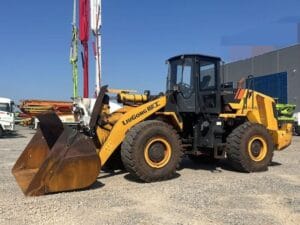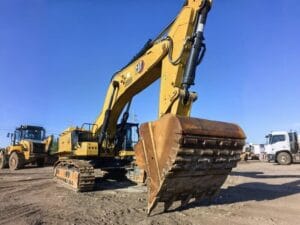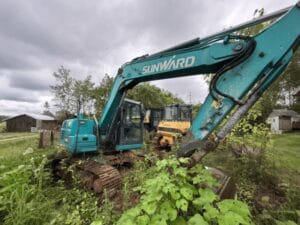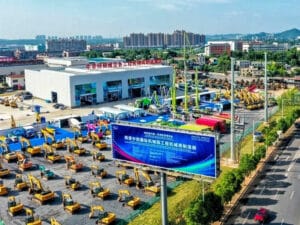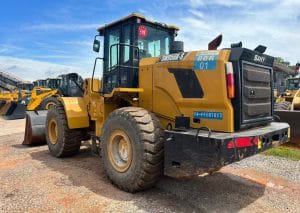

For international buyers seeking a cost-effective wheel loader, China has become one of Asia’s most important sourcing markets.
China is not only one of the world’s largest producers of construction machinery, but also has a large and increasingly active secondary market for used equipment. Every year, thousands of wheel loaders are replaced, traded, exported, or resold through dealers and machinery trading platforms.
For overseas buyers, however, buying a used wheel loader from China is not simply about finding the lowest price.
The more important questions are:
Is this a good time to buy a used wheel loader from China?
Which Chinese brands have the strongest market presence?
How do local brands compare in terms of reputation and resale value?
Why can two machines with the same model and year have very different prices?
Where can buyers find genuine used wheel loaders in China?
How can buyers avoid machines with hidden repairs, inaccurate working hours, or incomplete documentation?
This guide looks at the recent development of China’s wheel loader market and provides a practical framework for international buyers.
1. China’s Wheel Loader Market Has Changed Significantly in Recent Years
China’s wheel loader market has entered a different stage compared with five or ten years ago.
The industry has become increasingly concentrated around several major domestic manufacturers, while exports have become an increasingly important source of demand.
According to data released by the China Construction Machinery Industry Association, China sold 108,209 loaders in 2025, up 4.14% year on year.
What is particularly interesting for overseas buyers is the change in the sales structure.
Domestic sales were 54,326 units, down 3.94%, while exports reached 53,883 units, up 13.8%. In other words, exports accounted for almost half of total loader sales in 2025.
This has an important implication for the used-equipment market:
China’s wheel loader industry is becoming increasingly international.
Chinese manufacturers are selling more machines overseas, while Chinese used-equipment dealers are also becoming more experienced in exporting second-hand equipment.
For an international buyer, this means that the supply chain for purchasing a used wheel loader from China is becoming more mature.
2. Why Is China’s Used Wheel Loader Market Becoming More Attractive?
There are several structural reasons.
2.1 Large domestic equipment inventory
China has a very large installed base of construction machinery.
When contractors upgrade equipment, older machines enter the second-hand market. Some are sold domestically, while others are exported to Africa, Southeast Asia, Central Asia, the Middle East and other markets.
This creates a wide range of choices for international buyers.
You may find:
3-ton wheel loaders
5-ton wheel loaders
6-ton wheel loaders
8-ton and larger loaders
Standard construction loaders
Quarry and aggregate loaders
Mining-oriented machines
Port and bulk-material handling equipment
The 5-ton class remains particularly important because it is widely used in construction, aggregate, agriculture, logistics and general material handling.
2.2 The export market is becoming more important
The growth of exports is one of the most significant developments in China’s construction machinery industry.
XCMG, for example, reported that overseas revenue reached RMB 41.687 billion in 2025, representing 45.48% of its total revenue.
This does not mean every used machine is an export-quality machine.
It does mean that Chinese manufacturers and equipment dealers increasingly understand the requirements of overseas markets, including:
Export documentation
International shipping
Spare parts
Different engine standards
Local working conditions
Remote customer support
For buyers, this can make the purchasing process easier than it was several years ago.
3. Is Now a Good Time to Buy a Used Wheel Loader from China?
Rather than thinking about the market in terms of a single “perfect” buying month, overseas buyers should pay attention to equipment age, domestic demand, export demand, emissions standards and inventory levels.
There are several reasons why the current Chinese used-loader market can provide opportunities.
3.1 Domestic demand has been relatively weaker than export demand
In 2025, China’s domestic loader sales declined 3.94%, while exports increased 13.8%.
When domestic replacement and construction demand is slower, more used equipment can enter trading channels.
This can create opportunities for buyers who are willing to inspect multiple machines and negotiate based on actual condition rather than simply choosing the cheapest listing.
3.2 Older machines can offer a substantial price advantage
China’s transition toward stricter emissions standards has also affected the used-equipment market.
For overseas buyers operating in countries with less restrictive emissions regulations, older Chinese machines can sometimes offer attractive purchase prices.
However, buyers should never assume that an older machine is automatically a better deal.
The total cost should include:
> Purchase price + inspection + repairs + inland transportation + export charges + ocean freight + import taxes + spare parts + future maintenance
A machine that costs USD 3,000 less but requires USD 5,000 of repairs is not actually cheaper.
3.3 Electric wheel loaders are changing the market
Another major change is electrification.
The International Council on Clean Transportation reported that electric wheel loader offerings in China have expanded rapidly, with the top manufacturers including XCMG, SDLG, Shantui and LiuGong.
Industry research also indicates that electric loaders have become a much larger part of China’s loader market in recent years.
For overseas buyers, this creates a new question:
Should you buy a conventional diesel used loader or a newer electric machine?
The answer depends heavily on your application.
For remote construction sites, mining operations far from reliable electricity, or markets where charging infrastructure is limited, a conventional diesel loader may still be more practical.
For fixed sites such as aggregate plants, ports, factories, and recycling facilities, electric loaders may become increasingly attractive because of their operating-cost characteristics.
4. China’s Major Wheel Loader Brands
China’s wheel loader industry is highly concentrated around several major domestic manufacturers.
Different research sources use different statistical methods, but historical industry data consistently identifies Lonking, XCMG, LiuGong, and SDLG/Lingong among the major players.
A 2023 industry ranking published by Manufacturing Ranking Database estimated the market shares of the four leading brands at approximately:
| Brand | Estimated 2023 share | Market position |
| ————- | ——————————| ———————————- |
| Lonking | 19.7% | Major domestic manufacturer |
| XCMG | 19.4% | Major construction machinery group |
| LiuGong | 18.8% | Major wheel-loader specialist |
| SDLG | Part of the leading group | Strong domestic presence |
The same source estimated that the top four manufacturers accounted for more than 70% of the Chinese loader market. Importantly, the source itself states that these figures contain estimates and should not be treated as official audited market-share statistics.
Other industry research gives somewhat different rankings and percentages. For example, an analysis published in 2025 reported that LiuGong’s loader share had recovered to above 25% in 2023 and remained the leading brand in 2024 under its particular statistical methodology.
Therefore, overseas buyers should use market-share figures as a general indication of market presence rather than as an exact measure of brand quality.
5. LiuGong: Strong Reputation in Wheel Loaders
LiuGong is one of China’s most internationally recognized construction-equipment manufacturers.
The company has a particularly strong history in wheel loaders and has invested heavily in loader technology, electrification and international distribution.
LiuGong is frequently associated with:
Good durability
Mature wheel-loader technology
Strong parts availability
Large international dealer network
Good export experience
Strong resale demand in many developing markets
For an overseas buyer, one of LiuGong’s biggest advantages is not simply the machine itself.
It is the ecosystem around the machine.
If you can find local parts and technical support in your country, a used LiuGong loader can be easier to operate over the long term.
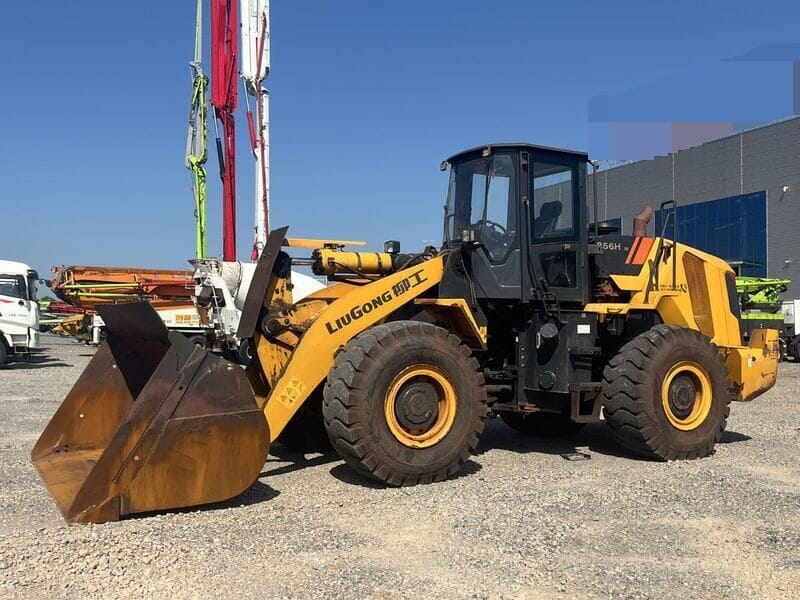
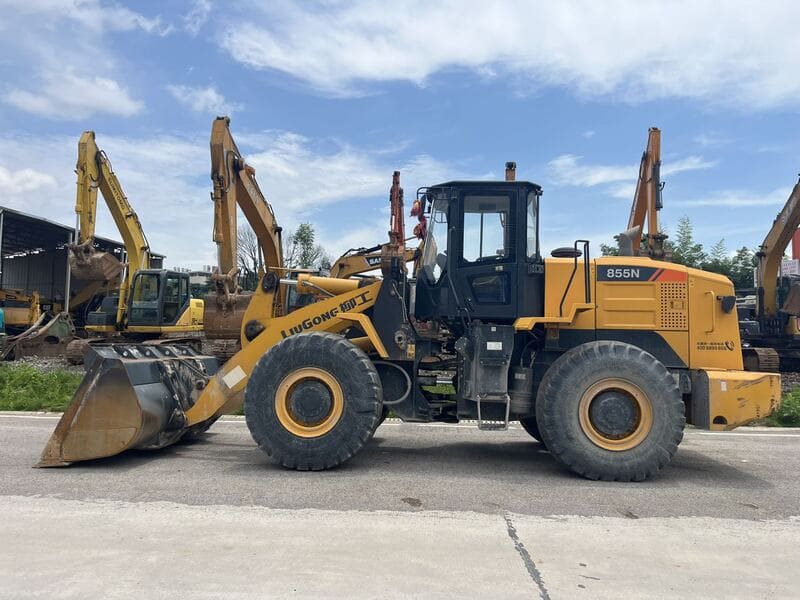
Popular used models include machines from the 856, 855, and related 5-ton-class series.
6. XCMG: Large Scale and Broad Product Coverage
XCMG is one of China’s largest construction-equipment manufacturers.
Its product portfolio covers excavators, wheel loaders, cranes, road machinery, mining equipment, and many other categories.
XCMG’s advantages for used-equipment buyers include:
Large production scale
Wide model range
Strong domestic recognition
Growing international presence
Broad spare-parts ecosystem
Increasing investment in electric equipment
XCMG also displayed the XC9108-EV electric wheel loader at bauma CHINA 2024, demonstrating the company’s focus on electrification.
Commonly used loader models encountered in the Chinese market include the ZL50-series and other 5-ton-class machines.
For buyers looking for a general-purpose loader, XCMG is one of the brands worth including in a comparison.
7. SDLG: Popular in Cost-Sensitive Markets
SDLG has long been associated with wheel loaders and earthmoving equipment.
The brand is particularly relevant to buyers who place strong emphasis on:
Purchase price
Simple maintenance
Parts availability
General construction applications
Agriculture and material handling
Quarry and aggregate operations
SDLG’s machines are frequently found in China’s used-equipment trading market.
Its strong presence in electric loader development is also worth noting. ICCT’s 2025 analysis identified SDLG as one of the leading manufacturers by electric loader model offerings.
8. Lonking: A Major Player in the Chinese Used Market
Lonking is another important name for overseas buyers.
Lonking has a particularly strong presence in wheel loaders, with the ZL30, ZL40, ZL50, and ZL60 series representing important product families.
According to Lonking’s 2025 annual report, wheel loaders generated RMB 4.598 billion in revenue in 2025, accounting for approximately 41% of the group’s total sales. The ZL50 series remained the company’s largest loader revenue contributor.
In the second-hand market, Lonking is often attractive to buyers who prioritize:
Affordable acquisition cost
Simple operation
Easy maintenance
Common 5-ton configurations
Availability of used inventory
9. Other Chinese Brands Worth Knowing
The Chinese market is much larger than the four brands above.
Depending on your application, you may also encounter:
Shantui
SEM
Lovol
SANY
XGMA
Sunward
Lingong/SDLG-related products
Smaller regional manufacturers
The right choice depends heavily on the machine’s actual application.
For example:
Construction site:
5-ton general-purpose loader may be sufficient.
Quarry:
Focus more on axle, transmission, hydraulic system, frame condition, and operating hours.
Mining:
Heavy-duty configuration, cooling system, structural condition, and service history become much more important.
Agriculture:
A smaller loader with lower operating costs may be more appropriate.
Port/logistics:
Cycle time, fuel consumption, visibility and attachment configuration become important.
10. What Do Overseas Customers Really Think About Chinese Wheel Loaders?
There is no single “customer opinion” because user experience varies significantly by country, application, and machine condition.
However, several recurring themes can be observed in international used-equipment transactions.
Positive factors
Buyers commonly value Chinese wheel loaders for:
Competitive purchase prices
Good availability
Relatively simple mechanical design
Strong value in the 3–6 ton segment
Increasing export support
Improving parts availability
A wide selection of used machines
Concerns
International buyers also frequently worry about:
Actual working hours
Previous operating conditions
Repainted machines
Rebuilt engines
Hydraulic-pump condition
Transmission wear
Axle condition
Accident or structural damage
Missing maintenance records
Different emission standards
Difficulty obtaining parts after purchase
Therefore:
Brand matters, but machine condition matters more.
A well-maintained 8-year-old loader can be a better purchase than a poorly maintained 4-year-old loader.
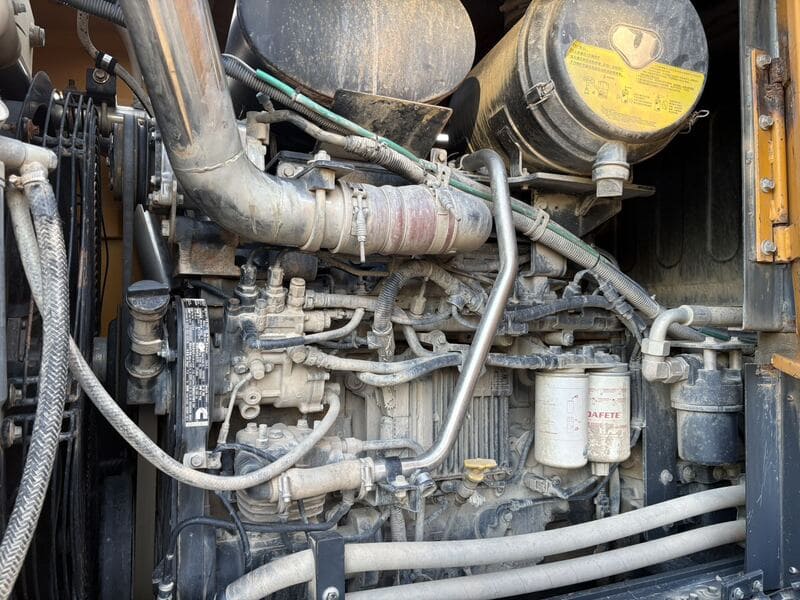
11. The Most Important Point: Do Not Buy a Used Loader Based on Photos Alone
This is one of the biggest mistakes international buyers make.
A clean-looking wheel loader can hide expensive mechanical problems.
Before purchasing, ask for a complete inspection covering at least:
Engine
Check:
Cold start
Exhaust smoke
Oil pressure
Coolant condition
Oil leakage
Abnormal engine noise
Engine serial number
Transmission
Check:
Forward/reverse shifting
Gear shifting
Transmission oil
Abnormal noise
Torque converter performance
Hydraulic system
Check:
Hydraulic pump
Hydraulic cylinders
Hydraulic hoses
Bucket lifting speed
Leakage
Operating pressure
Axles and drivetrain
Check:
Front and rear axle condition
Differential
Planetary gears
Drive shaft
Tire condition
Structure
Carefully inspect:
Loader frame
Boom
Bucket
Articulation joint
Welding repairs
Cracks
Signs of major accident damage
Electrical system
Check:
Instrument panel
Warning lights
Starter
Alternator
Air conditioning
Lighting
Sensors
12. Working Hours Are Important — But Do Not Trust the Hour Meter Blindly
The hour meter is useful, but it should never be treated as independent proof of machine condition.
A machine advertised as having only 3,000 hours may actually have experienced much heavier use.
Instead, compare the claimed working hours with:
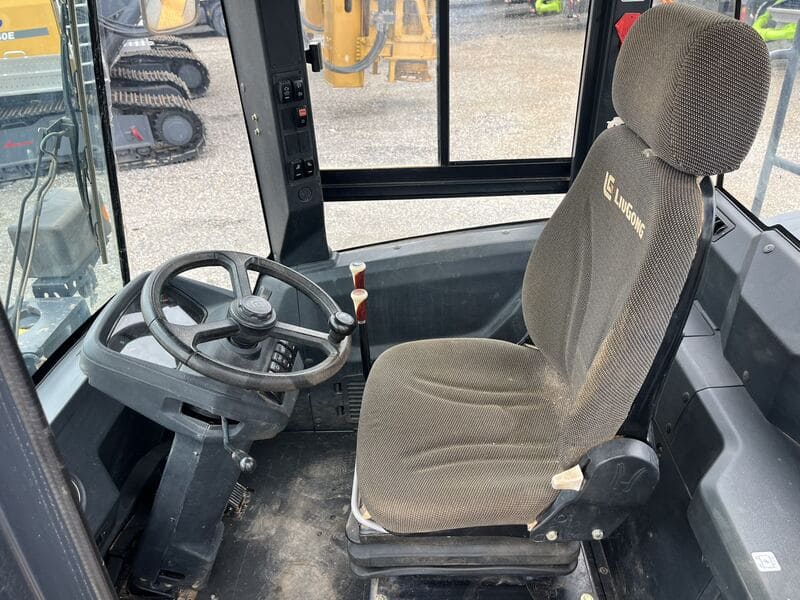
Seat condition
Steering wheel wear
Pedal wear
Bucket wear
Tire wear
Hydraulic-cylinder wear
Joystick condition
Engine condition
Maintenance records
The goal is to determine whether the machine’s overall wear is consistent with the stated operating hours.
13. Ask for a Real Machine Inspection Video
For overseas buyers who cannot visit China personally, a real-time or recent inspection video is one of the most useful tools.
Ask the seller to show:
1. Machine identification plate
2. Engine plate
3. Cold start
4. Engine running
5. Dashboard
6. Working-hour meter
7. Forward and reverse movement
8. Gear shifting
9. Bucket lifting
10. Hydraulic functions
11. Tires
12. Engine compartment
13. Undercarriage/axles and articulation area
14. Any visible repairs
Ideally, the seller should record the inspection specifically for your order rather than sending an old promotional video.
14. Where Can Overseas Buyers Buy Used Wheel Loaders in China?
There is no single channel that works for every buyer.
Instead, the Chinese market can be divided into several major sourcing channels.
14.1 Alibaba.com
Alibaba – Used Wheel Loaders channel
Alibaba has a very large number of Chinese used wheel loader listings.
Its advantage is the enormous supplier pool and convenient communication with exporters.
The disadvantage is that the platform itself does not eliminate the need for machine inspection.
A listing is only a starting point.
Buyers should independently verify:
Supplier identity
Actual machine location
Machine ownership
Machine condition
Export experience
Payment terms
Inspection results
Alibaba’s current China used-wheel-loader category contains thousands of listings, including Chinese brands and imported machines.
14.2 Made-in-China.com
Made-in-China.com – Used Wheel Loader Suppliers
Made-in-China.com is another B2B sourcing channel with Chinese machinery suppliers.
Its used wheel-loader section includes Chinese brands as well as used imported equipment.
For example, current listings include Longking used loaders and imported Caterpillar machines.
Again, buyers should treat platform listings as supplier discovery tools, not as substitutes for inspection.
14.3 Specialized Chinese Used-Equipment Online Markets
Specialized online markets like Chinafairlyused.com can provide a more integrated purchasing process.
A specialized online market may provide:
Machine sourcing
On-site inspection
Testing
Repair
Cleaning
Export documentation
Container loading
Ocean shipping
Spare parts
After-sales support
This can be particularly useful for first-time buyers who cannot travel to China.
For example, [Chinafairlyused’s Used Wheel Loader Buyer Guide] discusses Chinese used-wheel-loader brands, market trends, sourcing channels, and inspection considerations.
15. Physical Used-Equipment Markets in China
Another important sourcing channel is China’s physical machinery-trading network.
Major equipment trading areas can provide access to large inventories and allow buyers to compare several machines in person.
However, this channel is much more suitable for buyers who have:
A local Chinese representative
An experienced purchasing agent
An independent inspector
Someone who understands Chinese machinery terminology
If you cannot inspect the machine yourself, the apparent price advantage of a physical-market purchase can disappear very quickly if the machine needs unexpected repairs.
16. How Much Should You Budget?
There is no universal price for a used wheel loader.
The price depends on:
Brand
Model
Year
Working hours
Engine
Emissions standard
Tire condition
Hydraulic condition
Transmission
Bucket
Attachments
Maintenance history
Location in China
Export condition
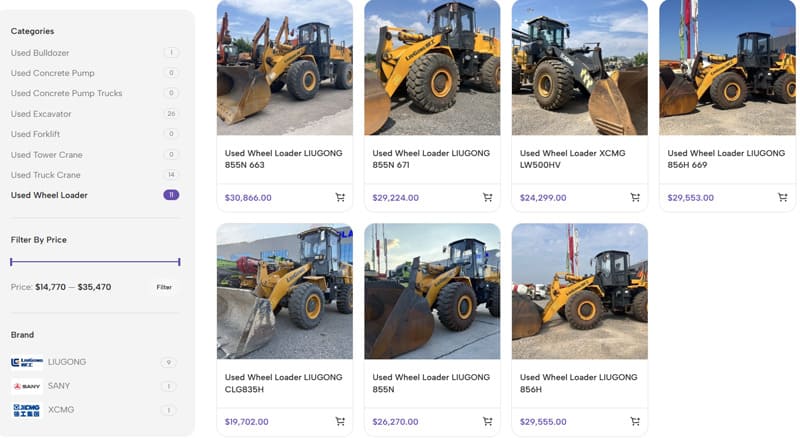
As an illustration, current online listings show substantial price differences even among Chinese-market used loaders.
For example, current MachineryTrader listings include relatively recent LiuGong 856H and XCMG ZL50GN machines in China, while Alibaba and Made-in-China show a much broader range of prices and machine ages.
Therefore, instead of asking:
> “How much is a used 5-ton wheel loader in China?”
A better question is:
> “How much should I pay for this exact machine, with this year, working hours, condition, configuration, and export cost?”
That is the number that matters.
17. A Practical Buying Strategy for Overseas Buyers
If you are buying your first used wheel loader from China, a simple process can significantly reduce risk.
Step 1 — Define the application
Tell the supplier:
Working environment
Required lifting capacity
Bucket size
Expected working hours per day
Material being handled
Climate
Terrain
Required emissions standard
Step 2 — Select 2–4 brands
Do not immediately choose a single brand.
Compare several machines with similar:
Year
Tonnage
Working hours
Configuration
Step 3 — Compare the total landed cost
Calculate:
Machine price + inland transport + inspection + export charges + freight + insurance + destination charges + taxes + spare parts
Step 4 — Request inspection evidence
Ask for:
Photos
Videos
Test results
Serial numbers
Maintenance history
Step 5 — Use independent inspection for expensive purchases
For high-value orders, independent inspection can be significantly cheaper than repairing a major transmission or hydraulic problem after arrival.
Step 6 — Confirm export requirements
Check your country’s:
Import regulations
Emission requirements
Used-equipment restrictions
Age limits
Customs requirements
Certification requirements
Step 7 — Keep a spare-parts package
For overseas projects, consider purchasing common consumables together with the machine:
Filters
Belts
Hydraulic hoses
Seals
Electrical components
Brake components
Common sensors
This can reduce downtime later.
18. When Does Buying a Used Chinese Wheel Loader Make Sense?
For many international buyers, a Chinese used wheel loader becomes particularly interesting when the priority is a balance between purchase cost, availability, and practical performance.
It can be worth considering when:
Your budget is limited
Your project does not require a premium international brand
You have access to Chinese-brand spare parts
Your local market accepts used Chinese construction equipment
You can arrange proper inspection
The seller can provide transparent machine information
The machine’s total landed cost remains competitive
But there is an important distinction:
A cheap machine is not necessarily a cheap machine to own.
The objective should be to find the machine with the best combination of:
> Purchase price + condition + remaining service life + parts availability + operating cost.
Say At The End
China’s used wheel loader market has become more international, more competitive, and more diverse.
The most important change in recent years is not simply the increase in the number of machines available.
It is the combination of:
large domestic equipment inventory + stronger exports + concentrated Chinese brands + growing electrification + increasingly professional used-equipment trading channels.
For overseas buyers, brands such as LiuGong, XCMG, SDLG and Lonking provide important options across the mainstream Chinese wheel-loader market, while other brands can also be suitable depending on the application.
However, brand reputation should never replace machine inspection.
The safest approach is to compare several machines of similar age and specification, verify the actual condition, calculate the complete landed cost, check your country’s import requirements, and only then negotiate the final price.
If you are sourcing from China remotely, the quality of the inspection and the transparency of the supplier can ultimately be just as important as the brand printed on the machine.
The right time to buy is not simply when the asking price is low. It is when the machine’s condition, price, logistics cost, import requirements, and expected service life all make economic sense for your project.