
The global demand for used Chinese excavators is booming. With infrastructure projects expanding across Africa, the Middle East, Southeast Asia, and South America, buyers are drawn to the competitive pricing and growing availability of Chinese machinery. However, this opportunity comes with significant risk. The secondary market, while vast, is also a minefield of scams, misrepresented machinery, and legal traps that can turn a cost-saving purchase into a devastating financial loss.
This guide provides a comprehensive safety framework for international buyers, drawing on documented cases and industry expertise to help you navigate the complexities of the Chinese used excavator market and avoid common pitfalls.
Understanding the Landscape: Why Scams Proliferate
Information asymmetry drives most fraud in this market. Many foreign buyers lack the local knowledge, language skills, and technical expertise to accurately assess a machine. Scammers exploit this by using sophisticated tactics to disguise problems and create an illusion of value. The market is not a monolith; different regions in China have developed their own notorious specialties in deception.
The “Art” of the Used Excavator Scams: Common Types of Fraud
Understanding the most prevalent scams is your first line of defense.
1. The Cosmetic Overhaul (The “Lipstick on a Pig” Scam)
This involves taking severely worn-out, high-hour, or even destroyed machinery and giving it a superficial facelift. The goal is to make an old, tired machine look like a “low-hour,” “well-maintained” machine. Some scams go to incredible lengths. In regions like Hebei’s Baoding (Xushui district), an entire black-market industry is dedicated to this craft. Common tactics include:
- Wholesale Repainting: Spraying a new coat of paint over the entire machine to hide rust, scratches, and evidence of major repairs.
- Hour Meter Tampering: Altering the machine’s computer to show a fraction of its actual working hours (e.g., changing 10,000 hours to 200 hours).
- Label and Serial Number Fraud: Replacing engine labels with fake ones to misrepresent the engine’s tier or year of manufacture, or grinding off and re-stamping VIN plates.
- Covering Critical Damage: Using filler (and in extreme cases, even materials like wood) to disguise cracks or damage in major structural components like the oil cylinder.
In one case, a buyer purchased a machine based on a seller’s representation that the “three major parts” were in good condition. The buyer later discovered that the machine was a “scrap piece” assembled from different parts, with leaks so bad it was virtually unusable.
2. The Bait-and-Switch (Low-Price “Flash Sale”)
This scam is commonly associated with cities like Hefei and relies on “lowballing” to lure in victims. Scammers post online ads or livestream videos showcasing “near-new” machines at unbelievably low prices with promises of “free shipping” or “global warranty.” The process is designed to force a hasty decision.
- The Hook: You see a great deal on a “quasi-new machine” priced significantly below market value.
- The Sinker: You are asked to pay a deposit to secure the “hot item.”
- The Switch: When you arrive at the designated location (often a random yard, not a legitimate dealership), the machine you see is either completely different—old, damaged—or doesn’t exist at all. If you walk away, your deposit is gone. If you try to proceed, you are often pressured into signing a “middleman contract,” making legal recourse difficult because you technically bought from a broker, not the owner.
3. The “Phantom Owner” & Theft-to-Sell Scam
This is a dangerous form of contract fraud. Scammers will rent a machine from a legitimate owner and then, without the owner’s knowledge, sell it to an unsuspecting buyer. They will forge documents showing they are the owner and provide a low price to make the sale quick. The true owner, often alerted by a disabled GPS tracker, will eventually reclaim the machine, leaving the buyer with nothing but a financial loss and a police report. A single fraudster in Yunnan Province orchestrated a series of such schemes, swindling over 4.5 million RMB from six different companies before being apprehended.
4. The Long-Con “Honeypot” (Mid-Range Scams)
Scammers in places like Shanghai and Kunshan are known for targeting buyers who think they are too smart to fall for low-price traps. They offer machines at a “reasonable” price (about 60-70% of the market value), which seems like a legitimate second-hand deal. These machines are often classic, older models that have been extensively run (over 15-20 years old) but are then “deep cleaned,” repainted, and presented as “well-maintained.” The illusion of a good deal can be incredibly convincing.
Your Pre-Purchase Defense Strategy: The 6-Step Safety Protocol
To protect yourself, you must transition from being a passive buyer to an active investigator. Here is a rigorous, step-by-step protocol to follow.
1. The Golden Rule: Never Buy Sight-Unseen
The most repeated advice from every source is the same: insist on a physical inspection. Do not rely on photos, videos, or live streams, no matter how convincing they appear. Videos used for negotiation may not show critical defects like leaks, cracks, or wear. If you cannot travel yourself, hire a trusted, independent third-party inspector with a proven track record. Make it a condition of any serious negotiation.
2. The “CSI” Investigation: Scrutinize the Papers and the Machine
Before a single cent changes hands, you must verify both the paperwork and the physical machine’s identity.
A. Verify Ownership (The Legal Check):
- Direct Deal: If possible, deal directly with the registered owner. Ask for their national ID, business license, and original purchase invoices.
- Cross-Check Documents: Ensure the name on the business license matches the name on the machine’s purchase invoice and the bank account you are paying into. Be wary of being asked to pay to a third party.
- Watch for Middlemen: Many scams hide behind a “middleman contract.” This makes it nearly impossible to sue the actual seller if something goes wrong. If you must use a broker, ensure they have a legally binding contract directly with the machine’s owner for the sale.
B. Physical & Technical Verification (The “Deep Dive”):
This is where you must be meticulous. Take your time and follow a structured checklist.
| Component | Critical Checks | Why It Matters |
|---|---|---|
| Frame & Body | Look for uneven paint, overspray, mismatched paint shades. Check for structural cracks and non-factory welding marks on the boom, arm, and X-frame. | Indicates major previous damage or repairs. Heavy patching suggests a history of overloading or accidents. |
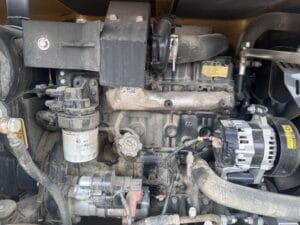
| Engine | Compare the engine serial number with the VIN plate. Start it and listen for knocking or tapping. Check for excessive exhaust smoke (blue = oil, black = over-fueling, white = coolant). | Mismatched numbers suggest a replacement or tampering. Odd sounds indicate internal wear. Smoke can signal severe engine problems. |
| Hydraulic System | Look for oil leaks around hoses, pumps, and cylinders. Check for scratches, dents, or chrome flaking on the cylinder rods. Test hydraulic functions (boom, arm, bucket, swing, travel) for smooth, powerful, and quiet operation. | Leaks mean potential contamination. Scratched rods will tear seals, causing expensive failures. Jerky or slow movement indicates a failing pump or valves. |
| Undercarriage & Track | Check the “four wheels and one belt”: drive sprocket, idler, carrier rollers, track rollers, and track shoe wear. For rubber tracks, check the condition of the tread and the inner metal core. | Undercarriage wear is a major cost. It’s the best indicator of a machine’s true working hours. A worn undercarriage on a “low-hour” machine is a red flag. |
3. The “Torture Test”: The On-Site Performance Test
Don’t just start the machine; operate it. Do “stall tests” (pushing a function to its limit) on the boom, arm, and bucket while listening to the engine and hydraulic pump’s sound and watching for changes in exhaust smoke color. This can reveal hidden power issues the seller may have masked.
4. The Price Reality Check: If It’s Too Good to Be True…
Resist the “cheap” temptation. A machine priced significantly below market value is almost certainly a trap. Scammers rely on the “deal” being so good that it clouds your better judgment. Do your research on the local market in China. Use reputable platforms or ask for price ranges from multiple independent sources.
5. Secure the Transaction: Third-Party Escrow and Clear Contracts
- Escrow: Do not wire money directly to a seller’s personal account. Use a reputable third-party escrow service that holds the funds until you confirm the machine has arrived and is as described. Some platforms like “51waji” are trying to build trust by offering more structured processes.
- Contracts: Have a bilingual contract drafted that clearly states the machine’s details (VIN, year, make, model, engine hours), the seller’s full identity and legal status, the warranty (if any), and the exact recourse if the machine does not match the description.
6. After the Sale: Expect Some Wear and Tear
It’s important to understand that a used machine is not new. Courts in China have ruled that buyers of used equipment must have a “reasonable psychological expectation” of wear and tear. A judge may deny a claim for minor defects like significant rust or a worn track, arguing that these are normal for an 11-year-old machine. However, this does not excuse fraud; the seller is still liable for concealing major flaws that affect the machine’s core purpose.
Say at the end
Buying a used excavator from China can be a highly successful and profitable endeavor, but it requires discipline and skepticism. The market is a complex landscape where amazing deals and devastating frauds sit side-by-side. By treating every transaction with suspicion, demanding physical inspections, meticulously checking the machine and paperwork, and securing your payment, you dramatically reduce your risk. Your profit is made not just in the price you buy at, but in the peace of mind you keep by avoiding a scam. Stay vigilant, stay informed, and don’t let a “too good to be true” price cheat you out of your investment.